
Who hasn’t heard of A Bridge Too Far? The film came out in 1977, but if you’re interested in the Battle of Arnhem, I still think it’s worth watching. Today I’m walking through Arnhem myself, visiting some of the places where that history unfolded.
I arrive by train and pick up the Airborne City Walk in Arnhem at the station, somewhere halfway along the route. I’d already noticed on the map that it’s an unusual route. It’s an open-ended walk, with a stretch near the bridge where you double back. I’ll see what makes sense when I get there.
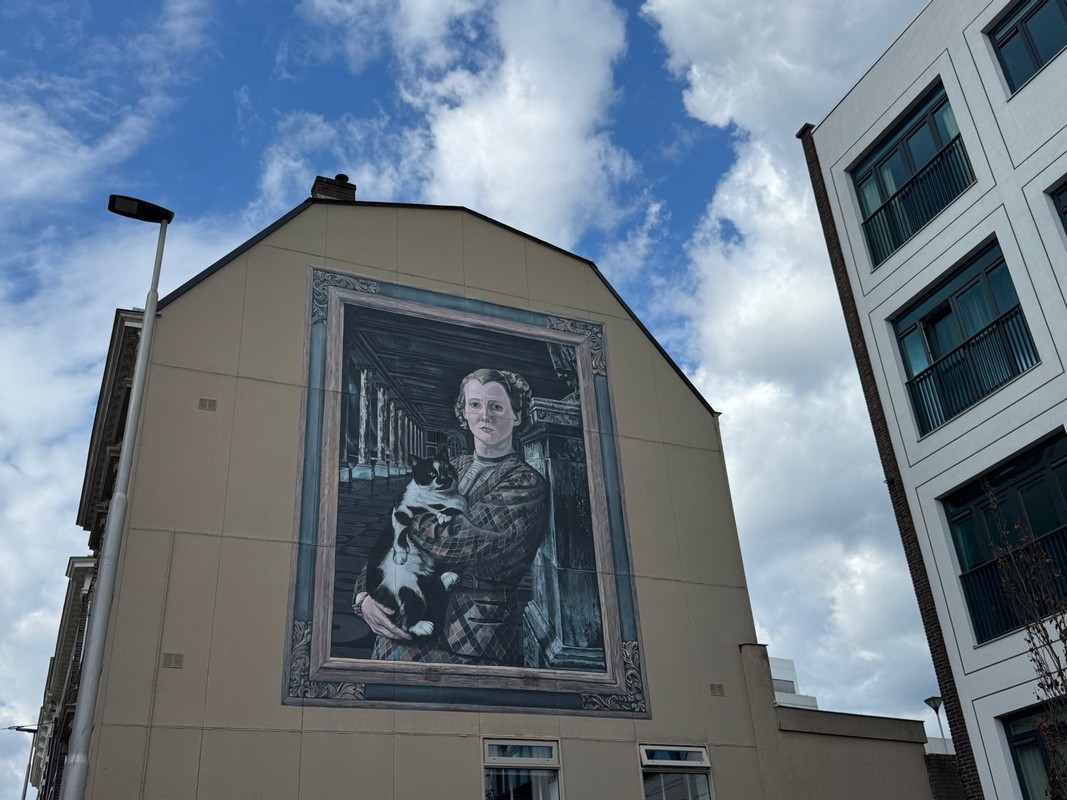
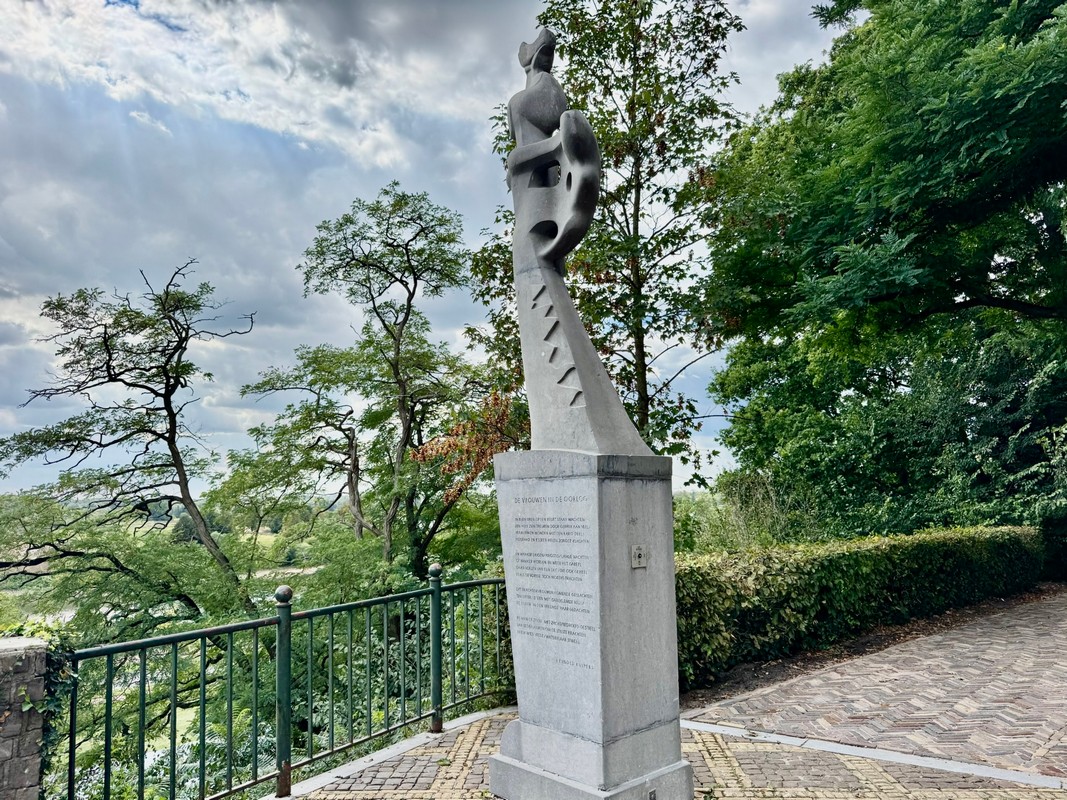
From the station, I walk along Utrechtsestraat, where a modern-looking sculpture catches my eye. It turns out to be a monument to women in wartime. I stop for a moment. How many women quietly kept things going during the Second World War, their efforts largely unseen?
There’s a poem beside the sculpture, signed by Reinold Kuipers. I assume he also made the sculpture and wonder why a man was chosen to design this particular monument. I make a mental note to look it up when I get home.
It turns out I’d got it wrong. Kuipers wrote the poem, and Nel Klaassen, a sculptor born in Arnhem, created the sculpture. It was unveiled on 18 September 1949 after an exhibition in Sonsbeek Park and moved to Utrechtsestraat that December. Its modern design caused quite a stir at the time. Looking at it now, I’d never have guessed it had stood there for more than 75 years. Read more about Nel Klaassen (in Dutch)
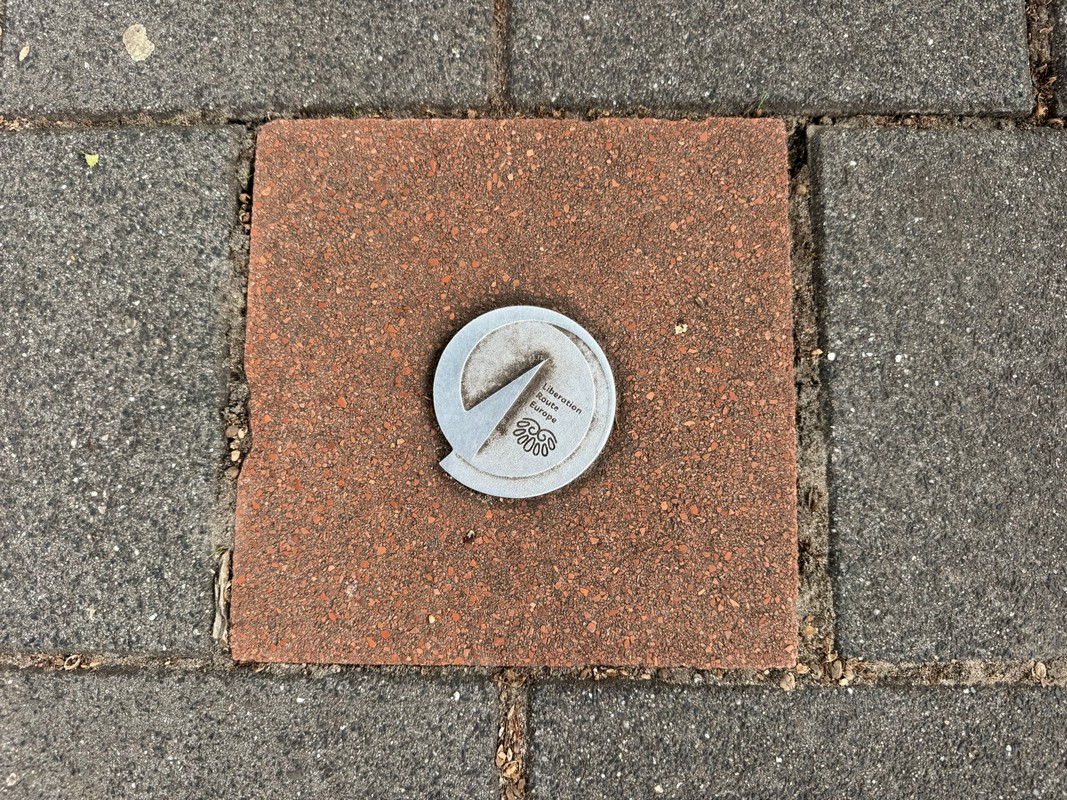
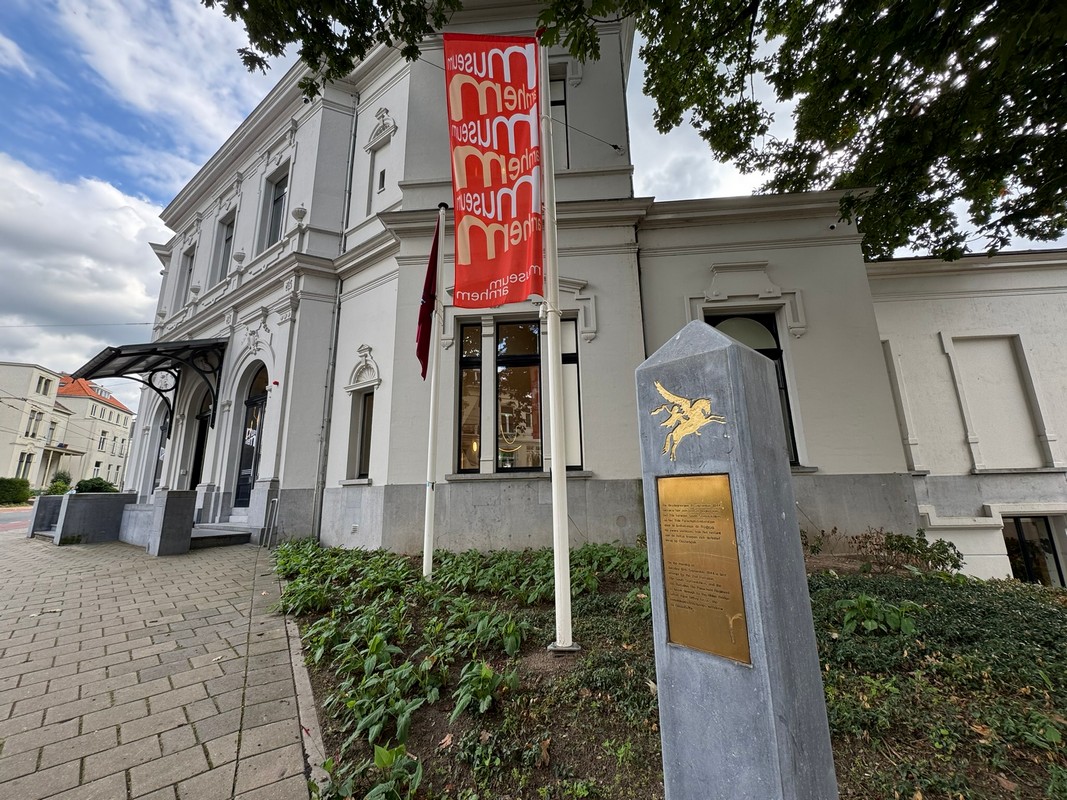
On the way, I spot information panels featuring Pegasus. From Utrechtsestraat, I also catch sight of some large artworks in the museum garden. I walk past the Market Garden memorial park and the ArtEZ building, where students study subjects including fine art, fashion, music, dance and theatre.
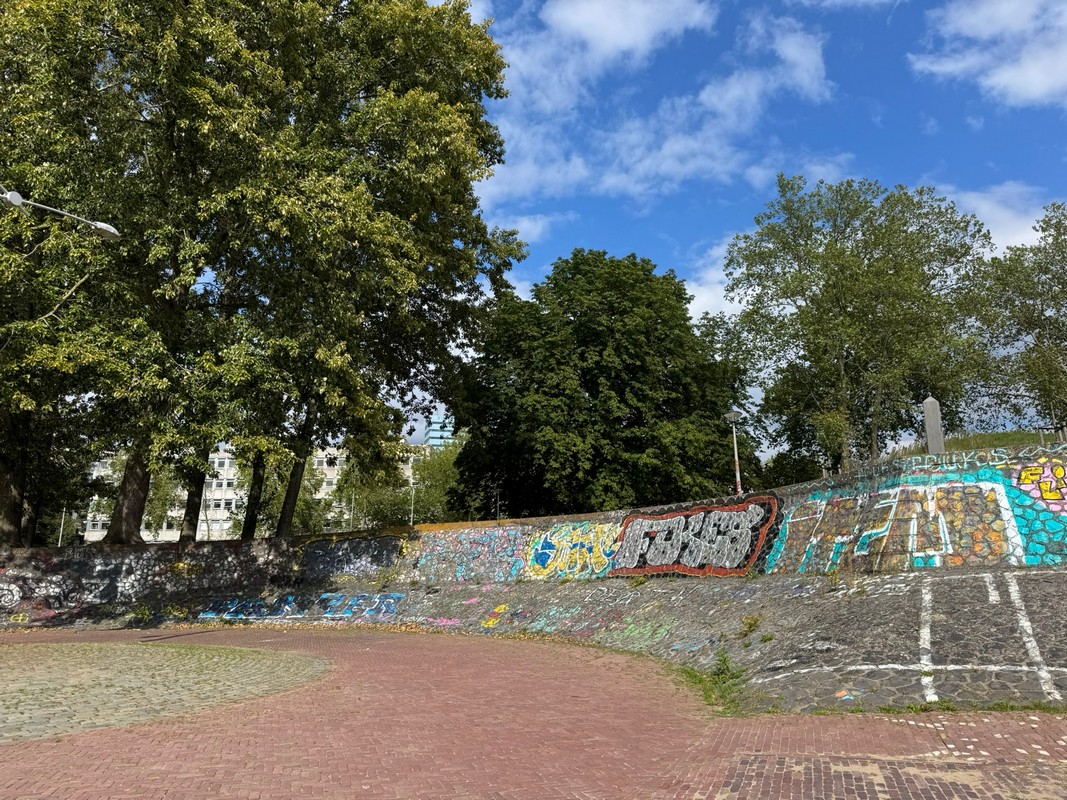
Down by the Rhine, I pass under Nelson Mandela Bridge. The bright colours on the walls remind me of South African street scenes I’ve seen on TV. Seeing Mandela’s name makes me think about his fight for freedom and how that theme runs through this walk, too, as I follow places tied to the liberation of the Netherlands.
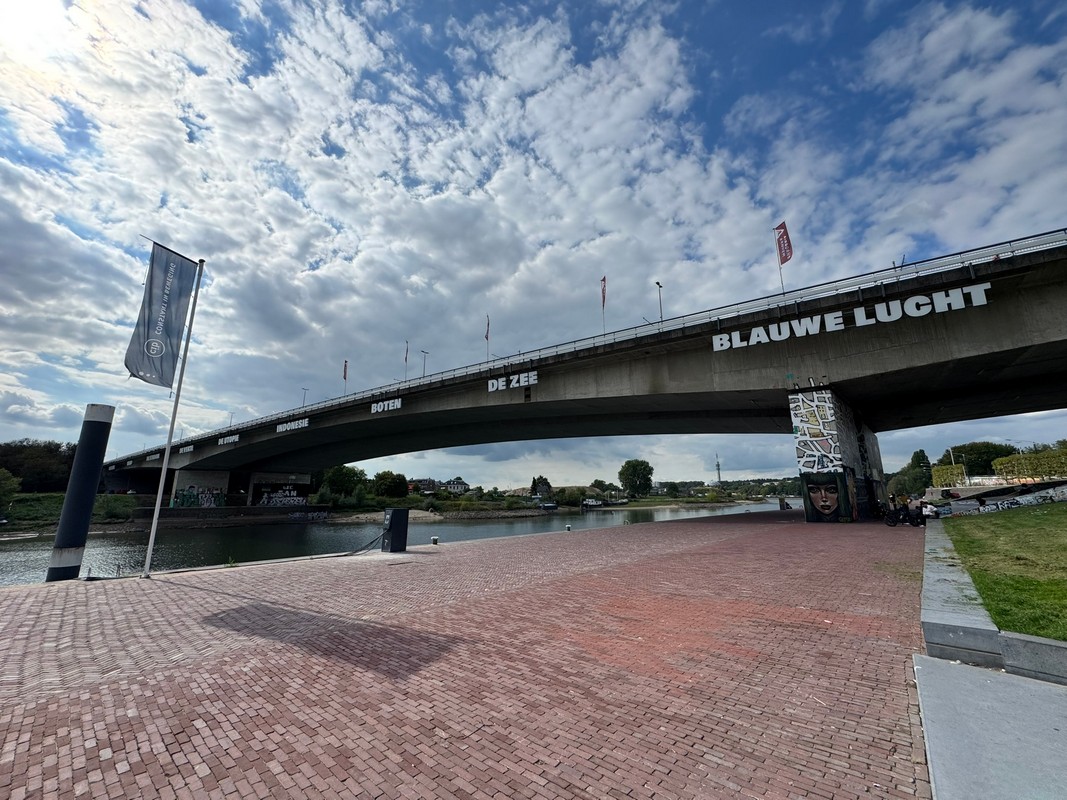
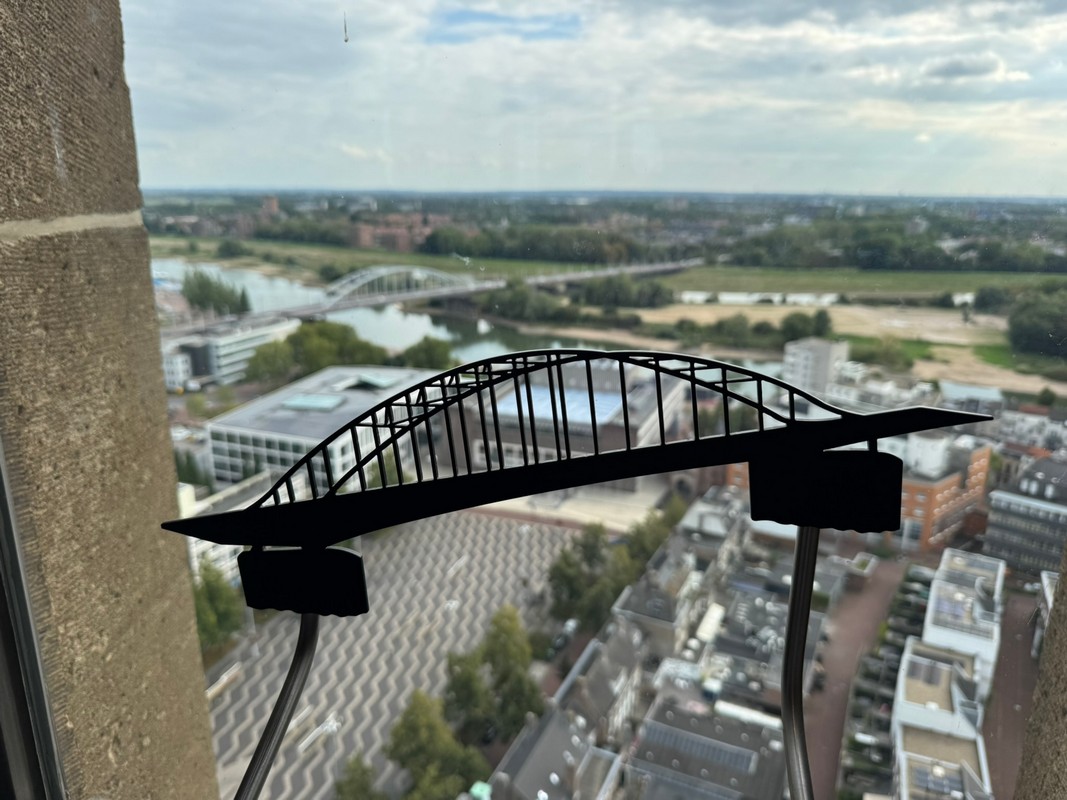
Further along, John Frost Bridge comes into view. In September 1944, the Rhine crossing at this spot was a key objective of Operation Market Garden. Market was the airborne part of the operation, and Garden was the ground offensive.
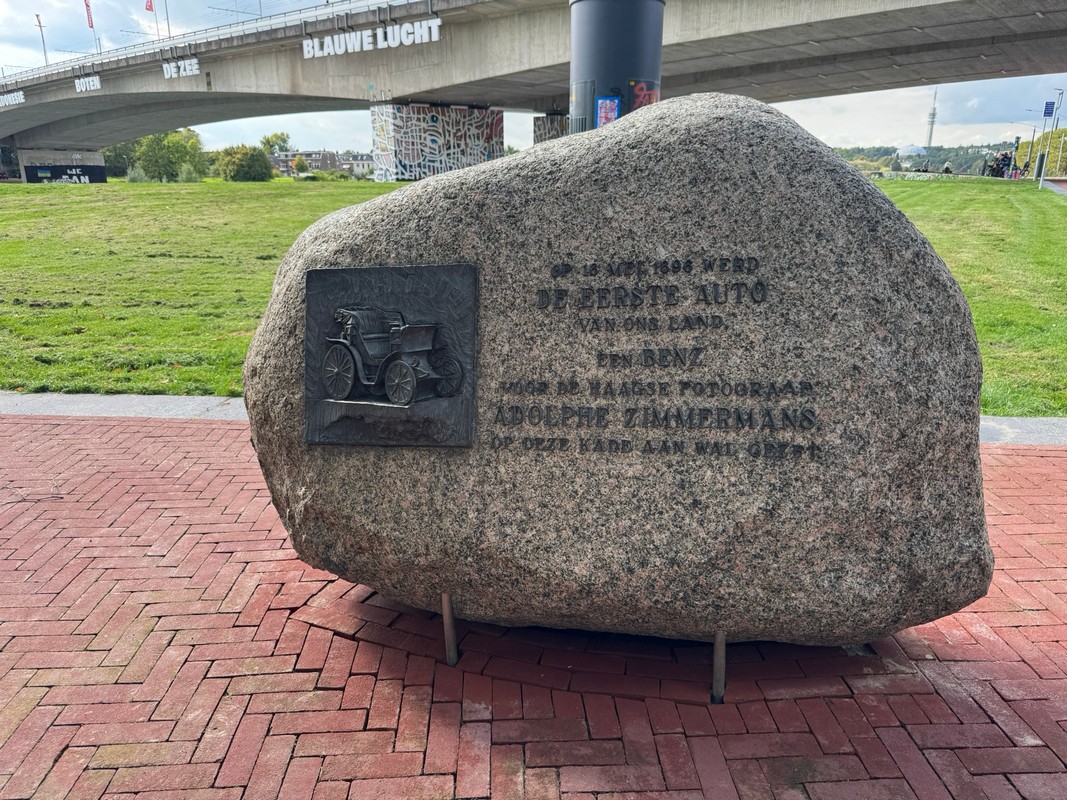
A large stone on the riverside catches my eye. Of course, I stop to see what it says. According to the inscription, the first car in the Netherlands was brought ashore here on 18 May 1896. On a walk about 1944, I’ve suddenly gone nearly another half-century back in time.
An enthusiastic volunteer welcomes me to Airborne at the Bridge, a small museum with free admission. He shows me photographs from 1944 and points through the large windows to the places where those events unfolded. One moment I’m looking at a wartime photograph. When I look up, John Frost Bridge is right there in front of me.
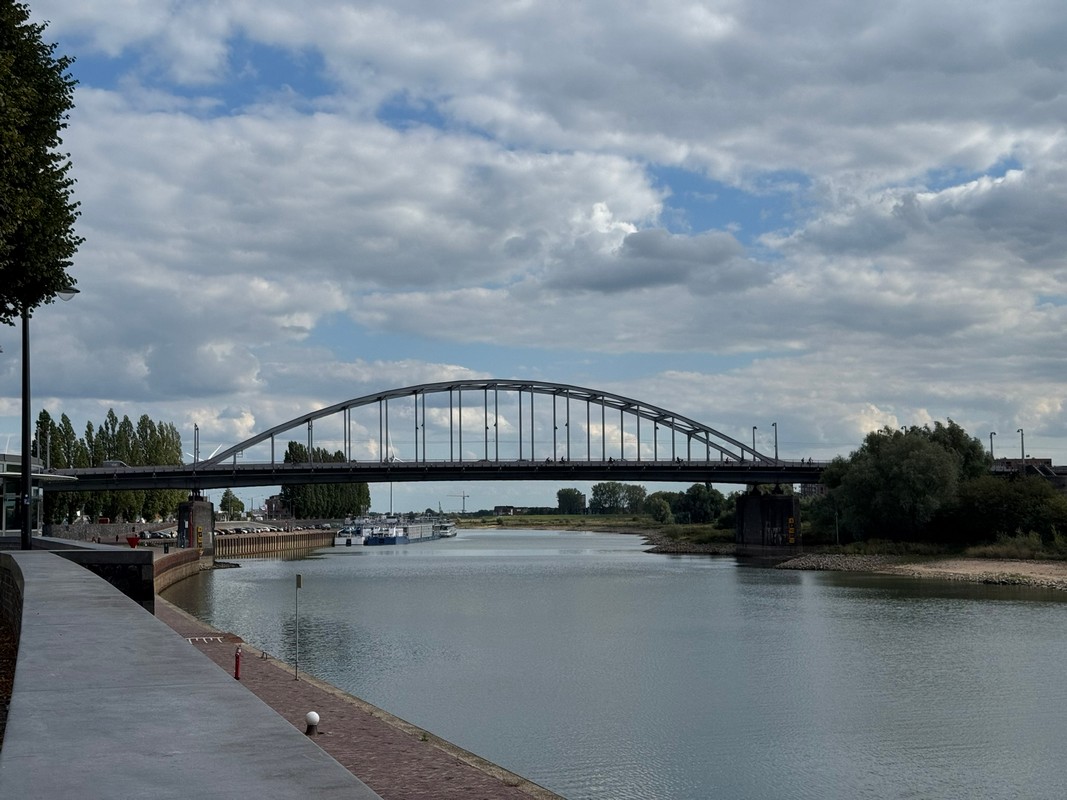
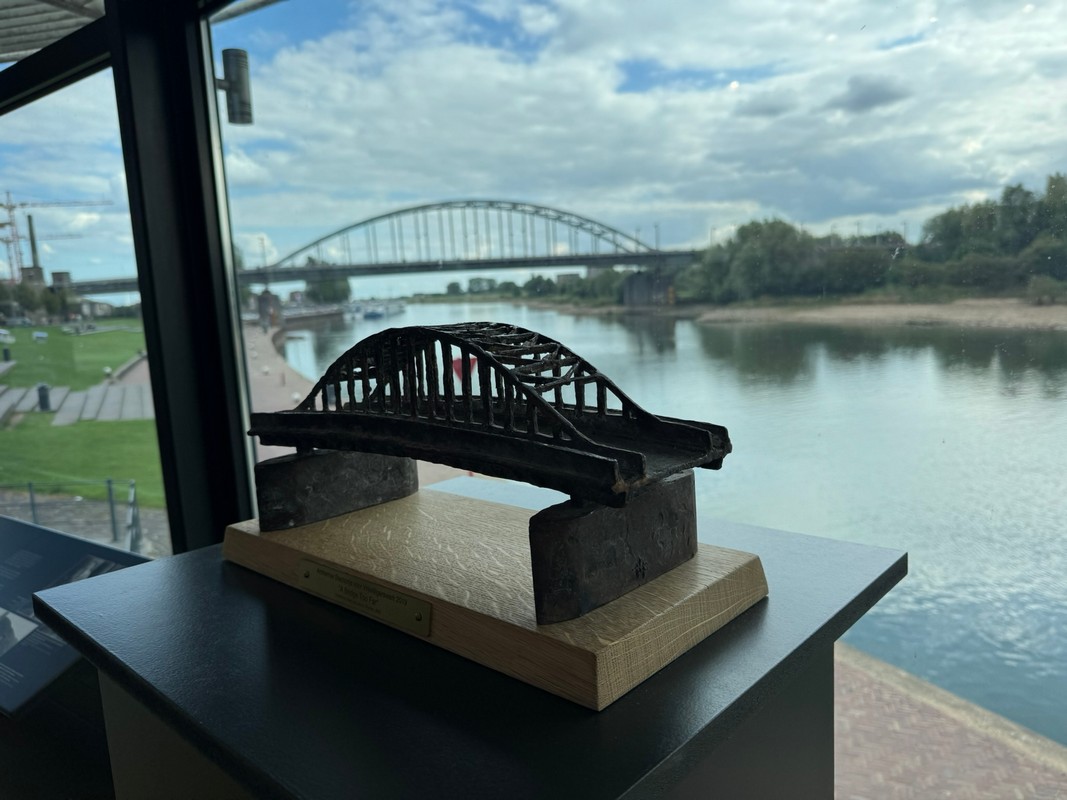
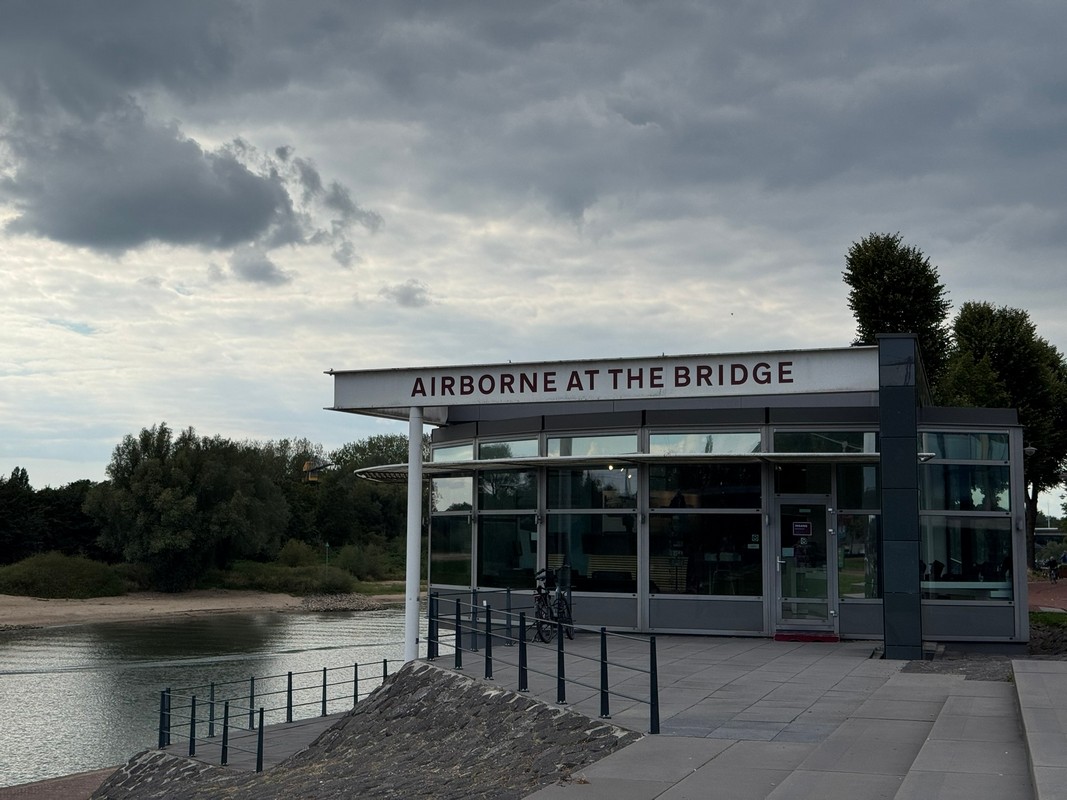
After watching a film downstairs, I spend a little time looking around upstairs. That view of the bridge alone makes the museum worth a visit.
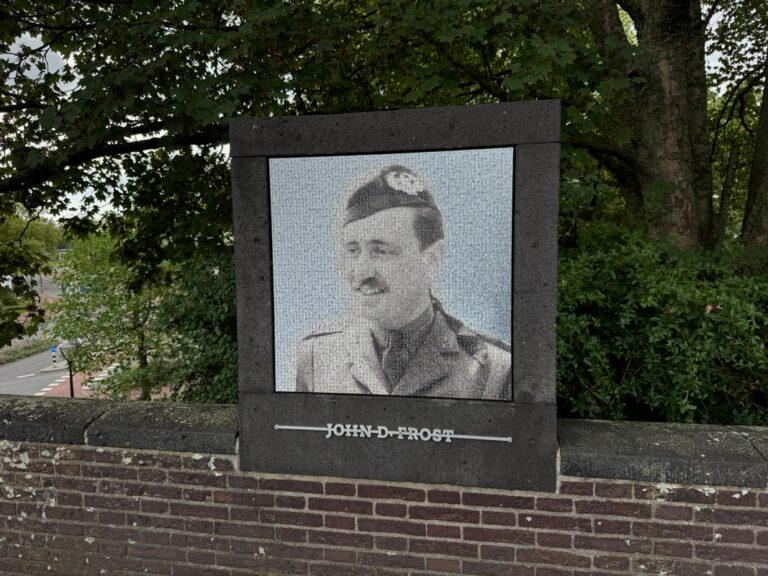
When I show the volunteer my route, he suggests a short detour to the right at the bridge before heading towards the Grote Kerk, where I can pick up the walk again. His tip takes me past the portrait of John Frost he’s just told me about.
In April 2025, the original bronze memorial plaque near the bridge was stolen. Why would anyone take it, I wonder. For the 4 May 2025 remembrance ceremony, the Dutch television programme Even tot hier commissioned a temporary portrait of John Frost. The original plaque was never recovered. In September 2025, an updated version of the portrait was installed in the square window, with John Frost’s daughter there for the occasion.
From a distance, I see John Frost’s face. Only when I get closer do I realise what it’s made of. Hundreds of small photographs of soldiers form the portrait. I stay a little longer to look at some of the individual faces.
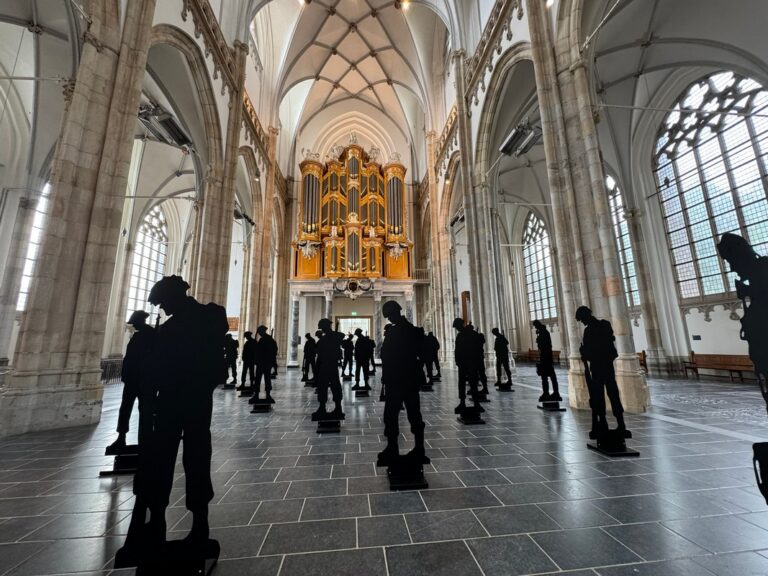
From the bridge, I walk to Eusebius Church, also known as the Grote Kerk. Whenever I pass a church, I feel drawn to pop inside. I get that same feeling on the Camino. Before I know it, I’m standing among life-sized metal silhouettes of soldiers.
When I visit, the church is hosting Standing with Giants – The Battle of Arnhem, a temporary exhibition that ran until 27 September 2026. I manage to get a ticket for the lift to the seventh floor just in time.
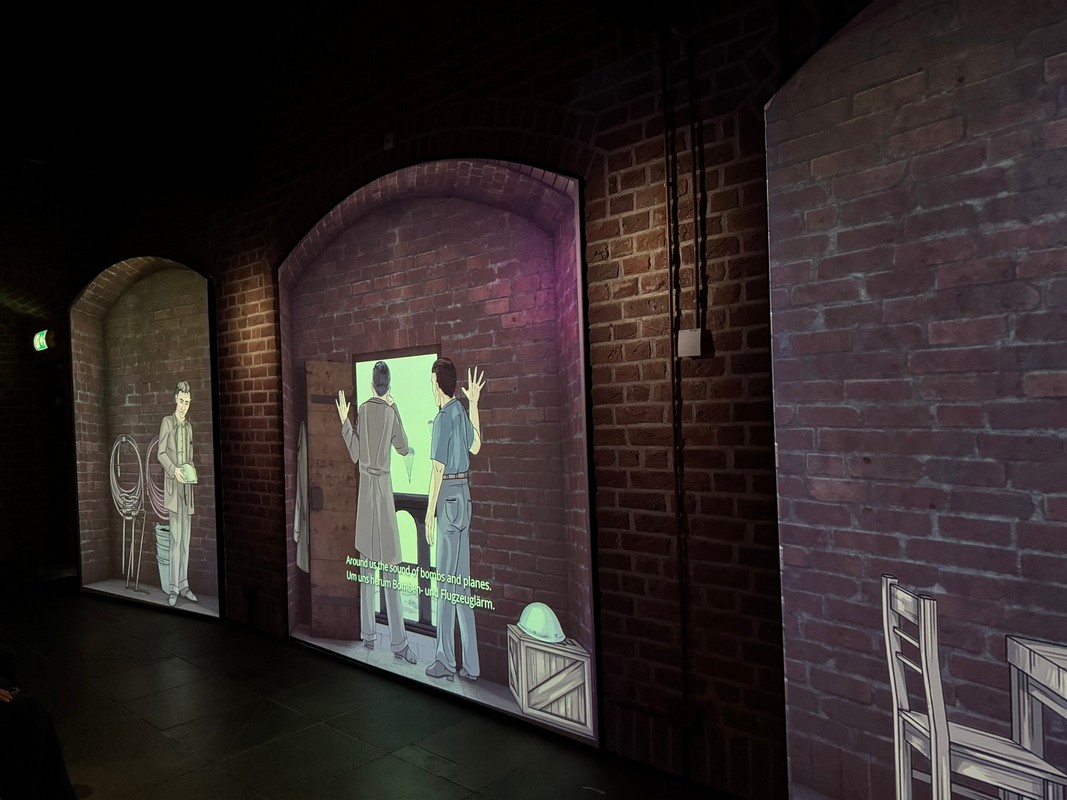
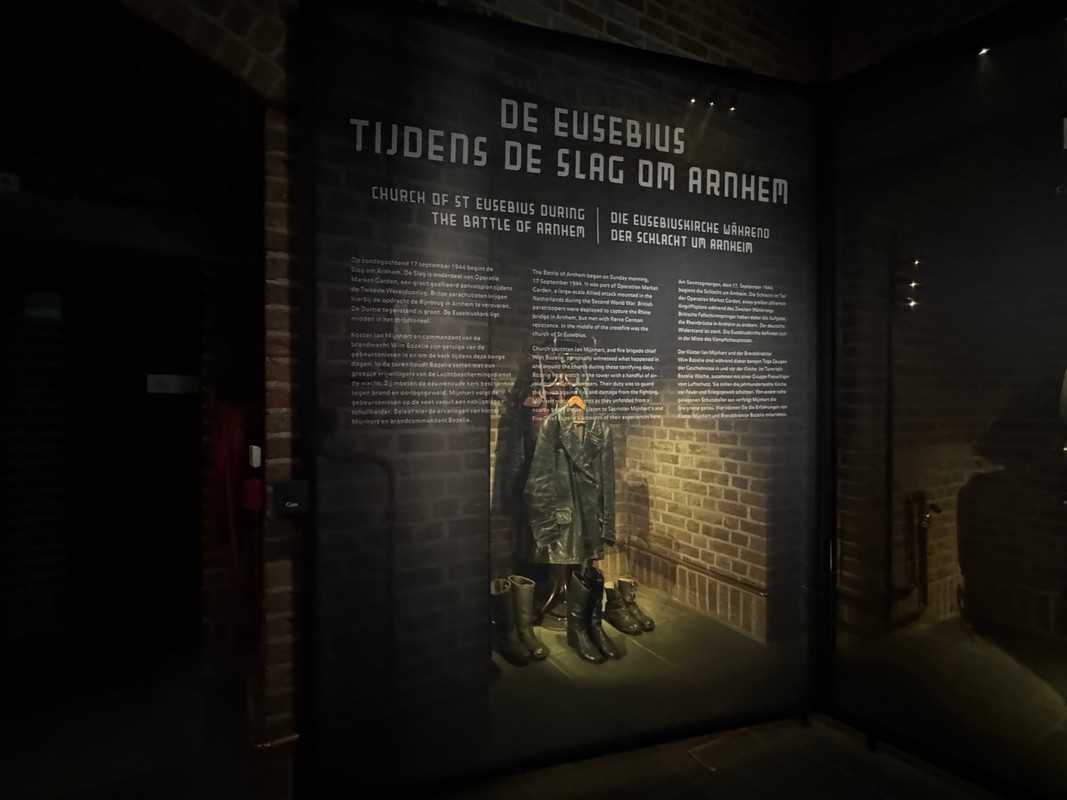
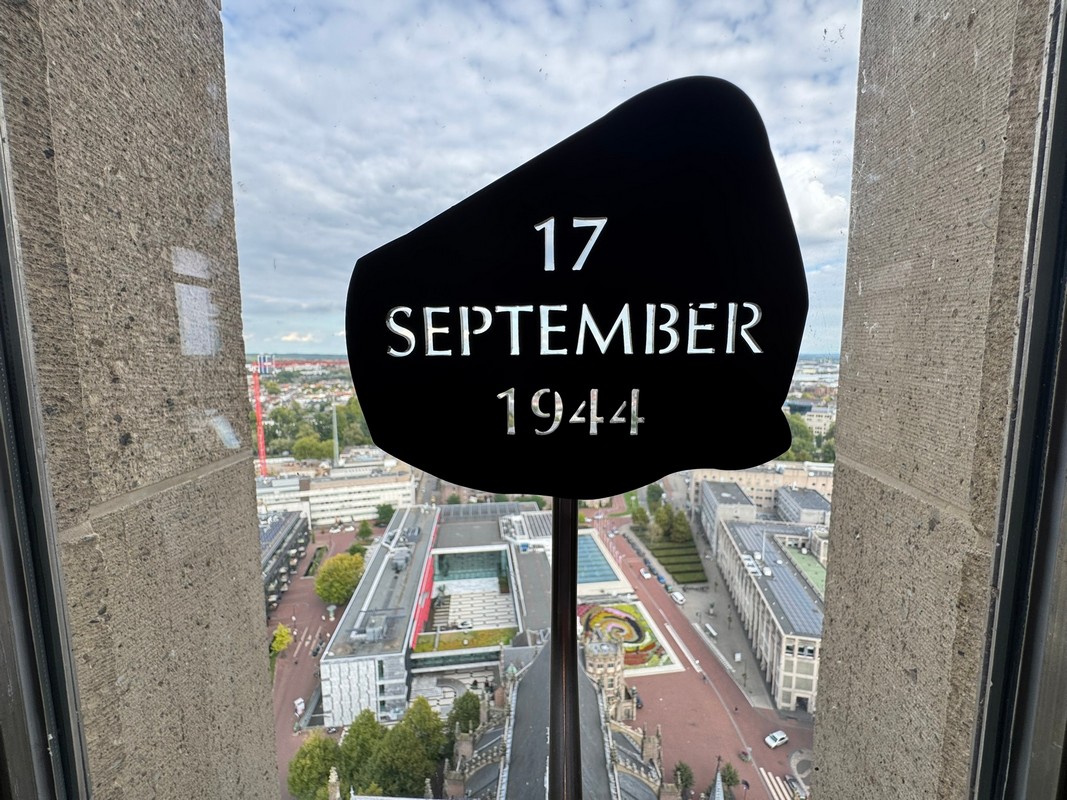
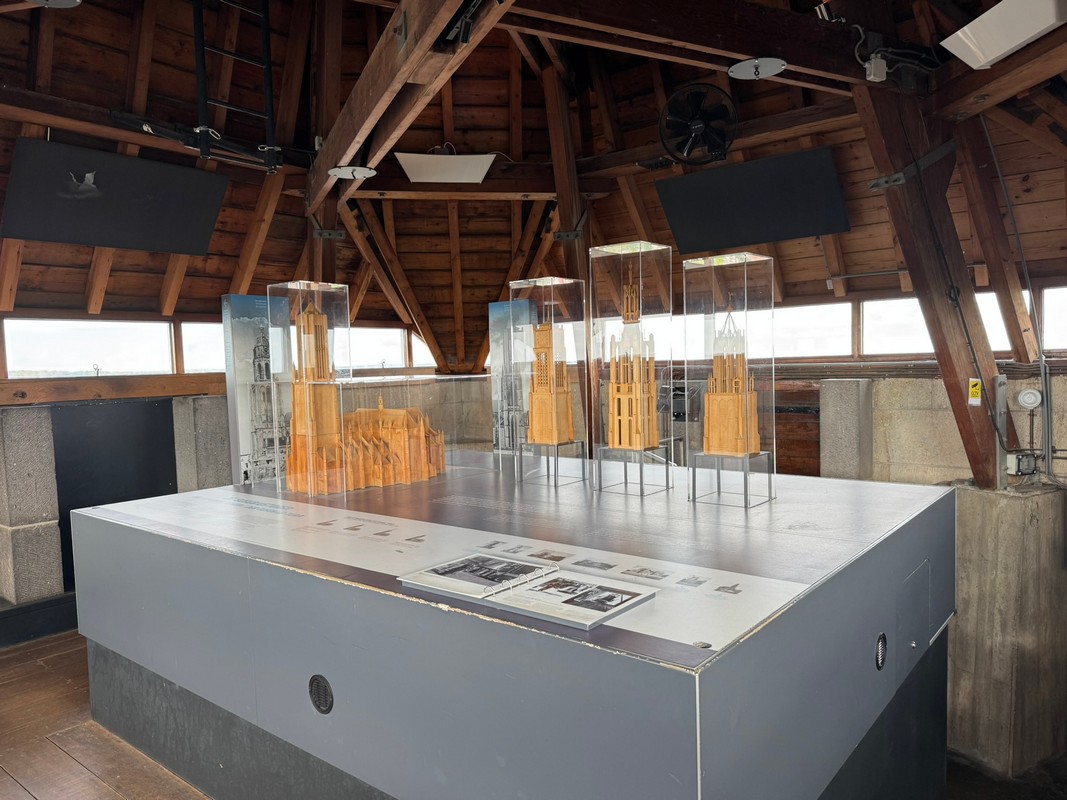
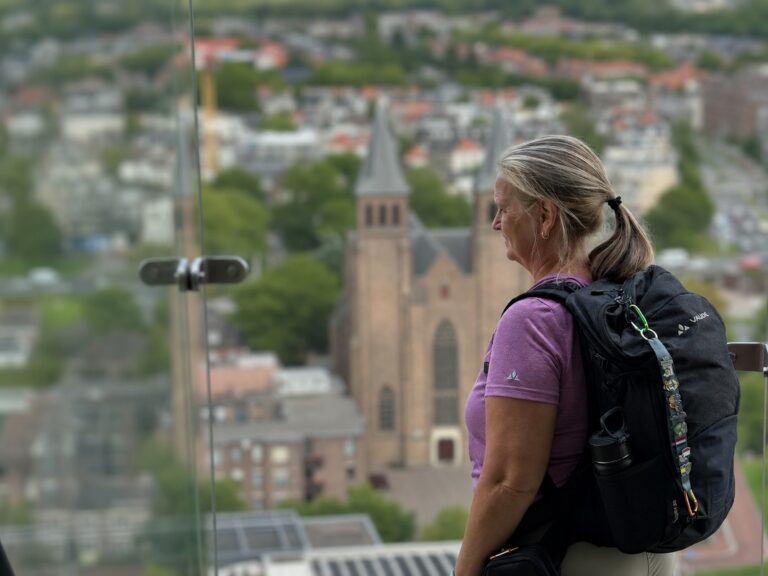
The tower also houses the permanent Battle of Arnhem Experience, where you can discover personal stories, including that of the church’s caretaker, Jan Mijnhart. From the glass balconies on the fifth and sixth floors, you can look out over the places where fighting took place in 1944. The balcony floors are glass too, so you can look straight down beneath your feet.
From Eusebius Church, I walk back to the station. I came to Arnhem for the story of the bridge. On the train home, I’m still thinking about Nel Klaassen’s sculpture, which I nearly walked past, and the exhibition I stumbled upon when I popped into the church. I’m glad I let my curiosity get the better of me a few times along the way.
What is the Airborne City Walk in Arnhem?
The Airborne City Walk is a walking route through Arnhem, the Netherlands, exploring places connected to the Battle of Arnhem in September 1944. Highlights include John Frost Bridge, the Airborne at the Bridge museum and Eusebius Church.
Can I start the walk at Arnhem Centraal railway station?
Yes. I arrived by train and joined the route partway through at Arnhem Centraal. From the station, I walked along Utrechtsestraat towards the Rhine and returned to the station after visiting Eusebius Church.
Where can I find the route and download the GPX file?
Visit Arnhem provides a route map and a downloadable GPX file. My walk starts at the railway station and includes a short detour near John Frost Bridge. View the route and download the GPX file
Is Airborne at the Bridge free to visit?
Yes, admission to Airborne at the Bridge is free. The museum overlooks John Frost Bridge, so you can look from the wartime photographs to the places where the events unfolded.
Can I still see Standing with Giants at Eusebius Church?
The temporary Standing with Giants exhibition ended on 27 September 2026. You can still visit the permanent Battle of Arnhem Experience in the church tower and look out across Arnhem from the glass balconies.
Location: Arnhem, Gelderland, the Netherlands.
Starting point: Arnhem Centraal railway station, where I joined the route partway through.
Route: From the station, I walked along Utrechtsestraat and followed the Rhine to John Frost Bridge. After a short detour to see the portrait of John Frost, I continued to Eusebius Church and walked back to the station.
What you will see: The monument to women in wartime, the Rhine, John Frost Bridge, Airborne at the Bridge and Eusebius Church.
My tip: Take time to visit Airborne at the Bridge. You can look from the wartime photographs to the places where the events unfolded.
Good to know: Admission to Airborne at the Bridge is free. If you plan to visit the Eusebius Church tower, check the opening hours before you go. The balconies have glass floors.
Route map and GPX: Airborne City Walk on Visit Arnhem. The published route starts at Jansbinnensingel 19.
