
The White Ribbon Mile in Oosterbeek, near Arnhem in the Netherlands, commemorates the retreat of Allied troops towards the Rhine in September 1944. I combine my walk with visits to the Airborne War Cemetery and the Airborne Museum at Hartenstein. Together, these places bring the stories behind the landscape much closer.
My day begins with a visit to the Airborne War Cemetery in Oosterbeek. I know the cemetery is here, and I have seen a sign pointing towards it in the village centre. However, none of the walking routes I have looked at include it. So, before starting my walk, I drive there first.
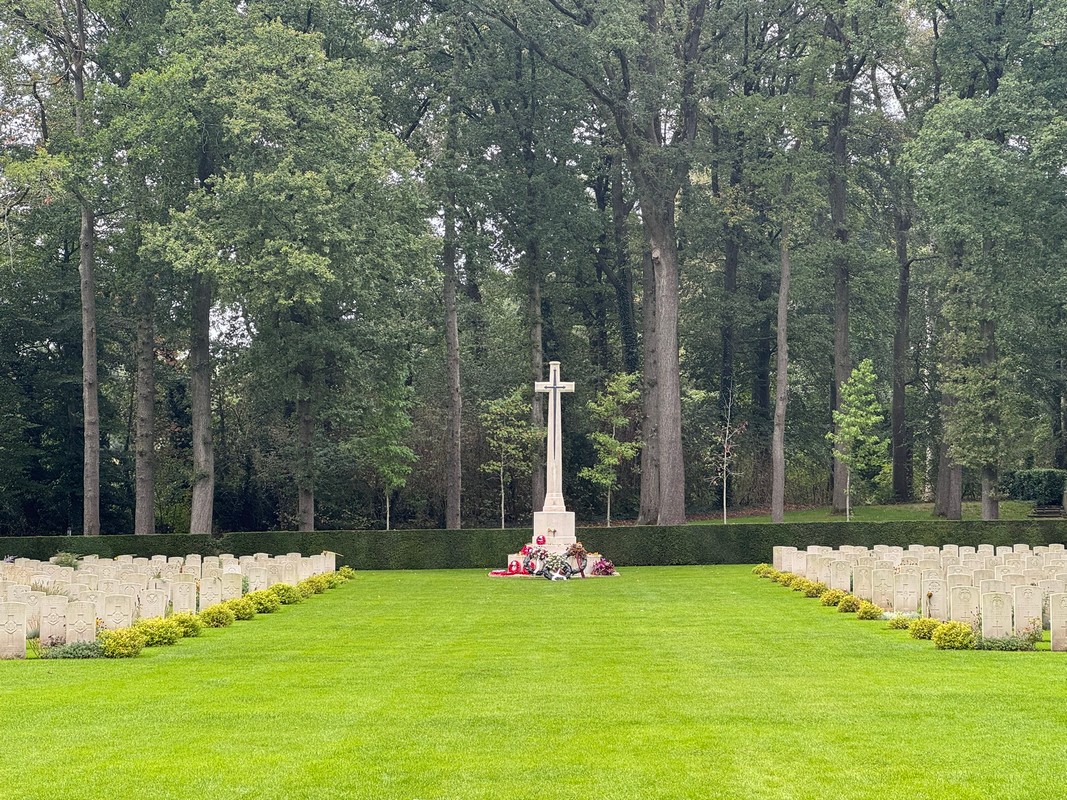
More than 1,750 Allied servicemen are buried in this military cemetery. Most lost their lives during the Battle of Arnhem in September 1944.
Walking between the long rows of white headstones, the scale of that loss begins to sink in. Behind every name is a story. And a family who had to carry on without a father, son, brother or husband.
That becomes even more real when I stop to look at the cemetery register. An English-speaking gentleman starts talking to me. He tells me he has been searching for the grave of his 82-year-old friend’s father. He has now found it.
His friend never knew his father. He was killed here in the Netherlands before his son was born. The man standing opposite me is visibly moved. Suddenly, one name among so many has a personal story attached to it.
The Cross of Sacrifice, a large stone cross bearing a bronze sword, stands in the cemetery. Near the entrance is the Stone of Remembrance, inscribed with the words:
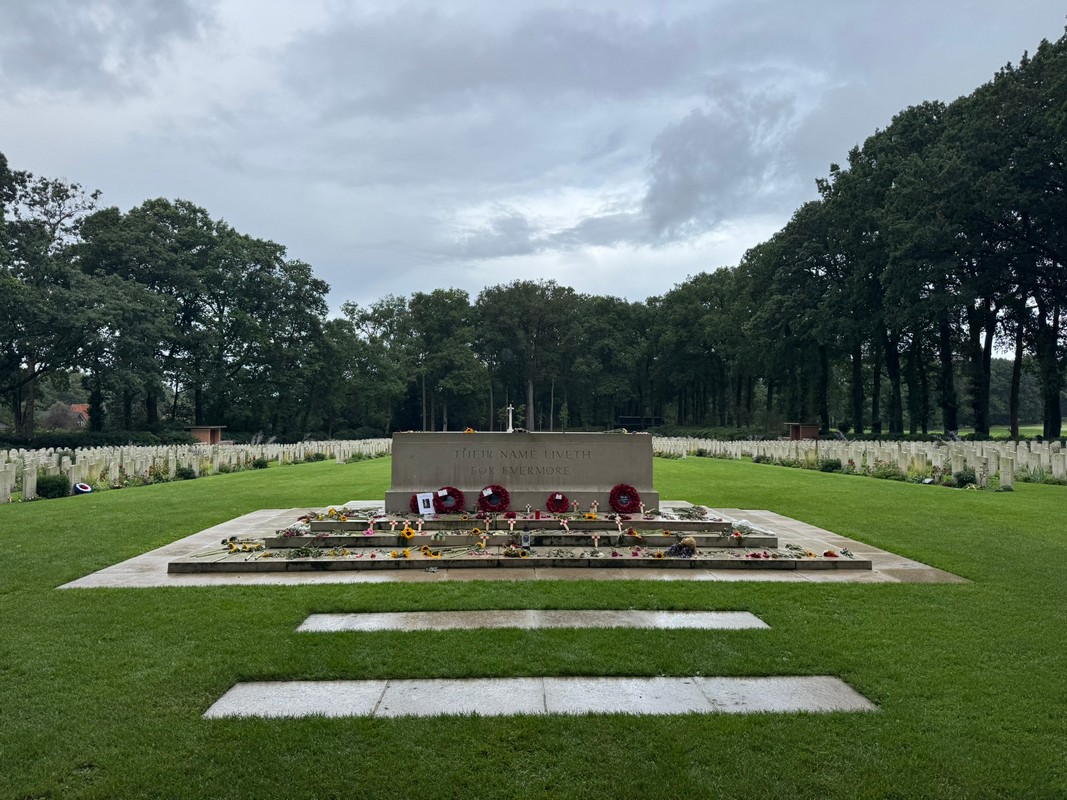
Their name liveth for evermore.
A short sentence, but one that says so much.
Visitors come and go throughout my visit. A coach even pulls up. Perhaps it is a group visiting wartime remembrance sites; I cannot say for sure. Either way, I am glad to see so many people taking the time to pause here.
These stories need to keep being told. It is something I find myself thinking often during these days.
After the cemetery, I drive to the Airborne Museum at Hartenstein. As far as I understand, this is where the White Ribbon Mile begins. Before setting off, I visit the museum.
The museum occupies Villa Hartenstein. The present villa dates from around 1865 and became a hotel in 1942. During the Battle of Arnhem, Hartenstein served as the headquarters of the British airborne forces under Major-General Urquhart. Its elegant exterior gives little hint of what happened here.
I receive a warm welcome at the entrance and a helpful explanation of the route through the museum. Inside the original building, I discover more about Hartenstein’s history. I also visit the room for quiet reflection, with its collection of medals. I particularly like the care taken with their presentation.
Upstairs, the introductory film makes a strong impression. It helps me understand how the battle unfolded. I also gain a clearer picture of the Oosterbeek perimeter: the area into which British troops withdrew and where they tried to hold their position.
I previously walked the Perimeter Walk, so this explanation adds context to places I have already seen.
It also helps me understand the landscape I will be walking through today, and why the cemetery lies outside the Perimeter Walk.
Downstairs, I visit the temporary exhibition before entering the Airborne Experience. I find it deeply affecting. It is difficult to explain exactly how it feels. Some things are best experienced for yourself, and for me, this is one of them.
By the time I leave, I have much more background for the walk ahead.

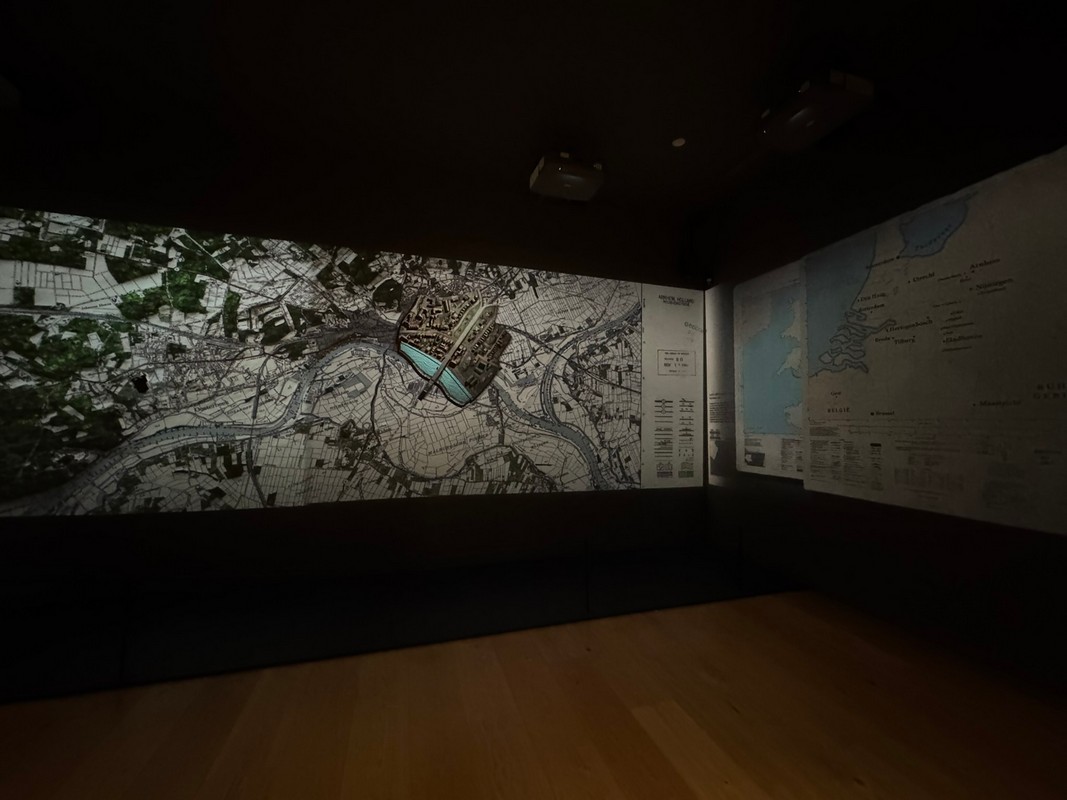
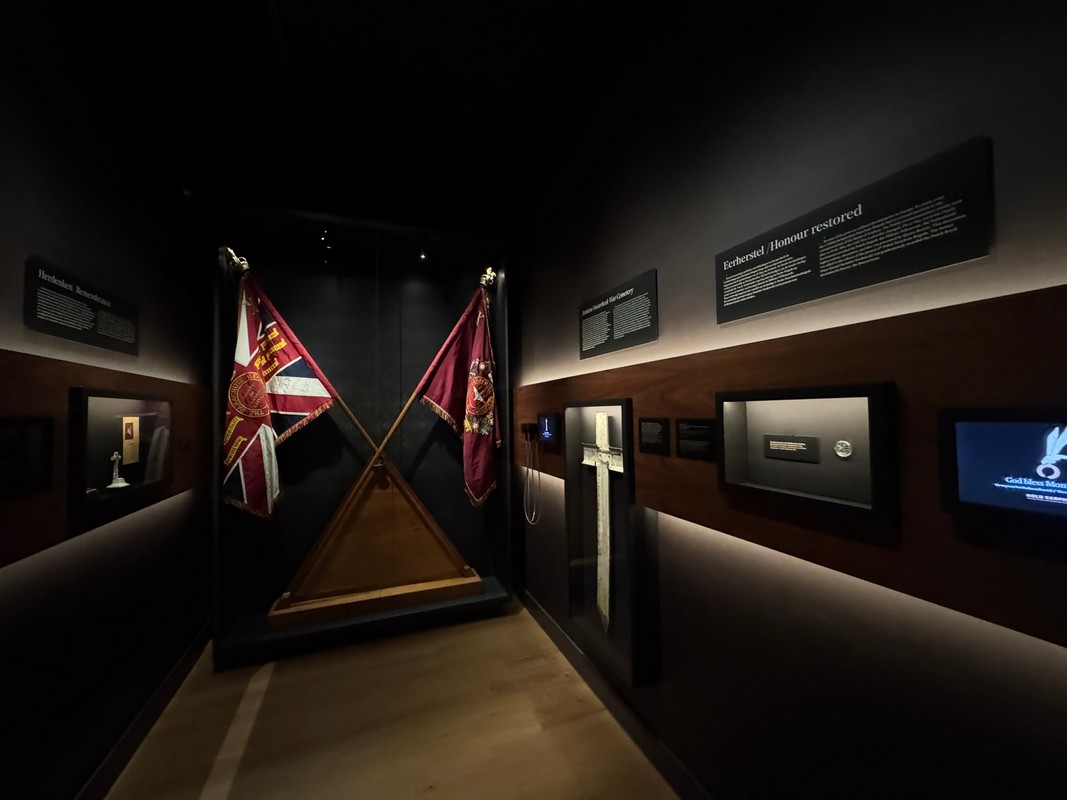
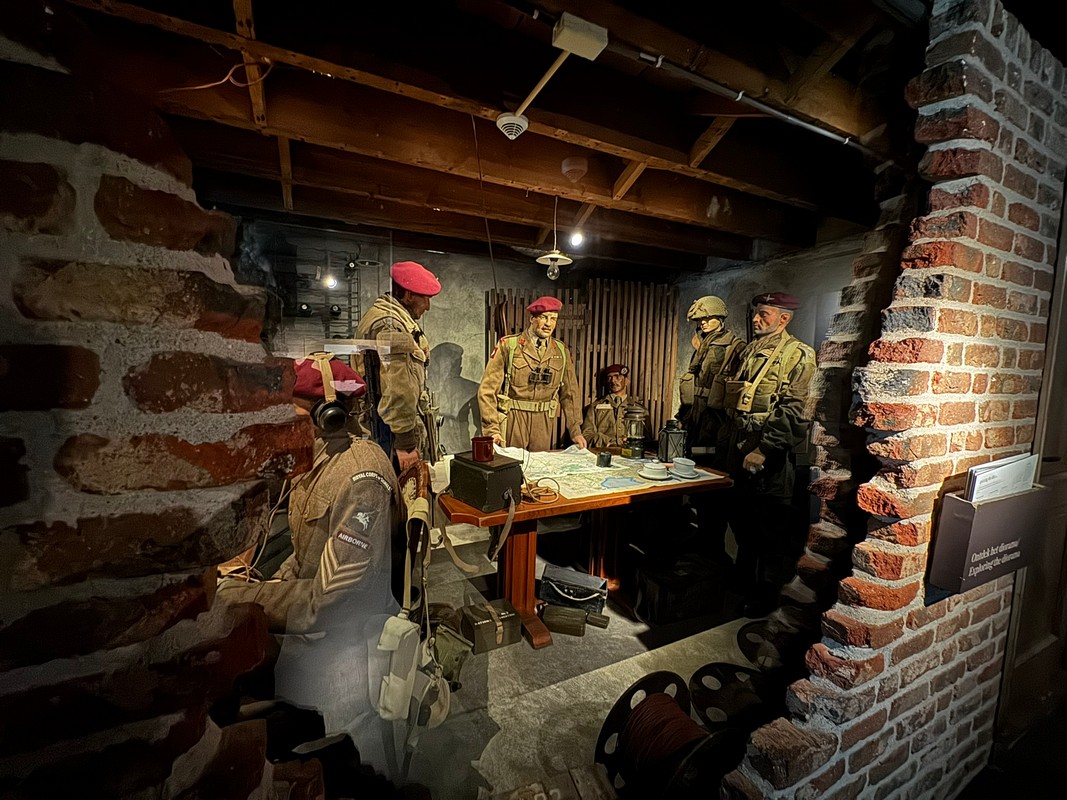
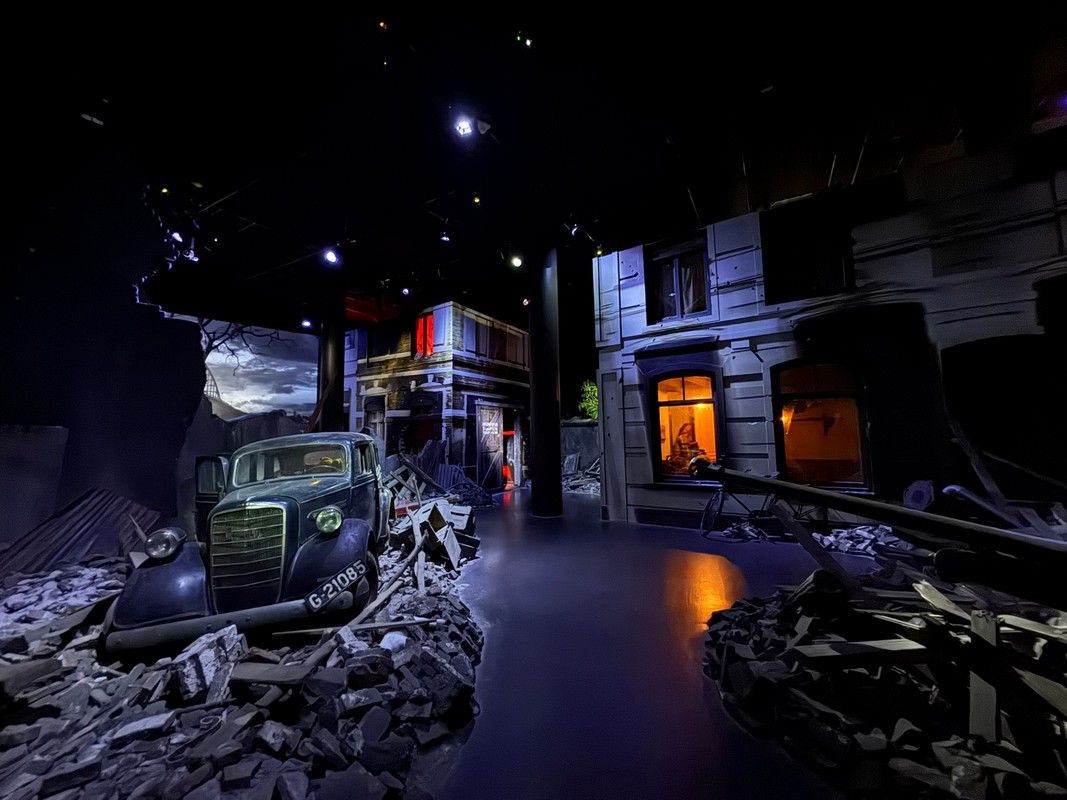
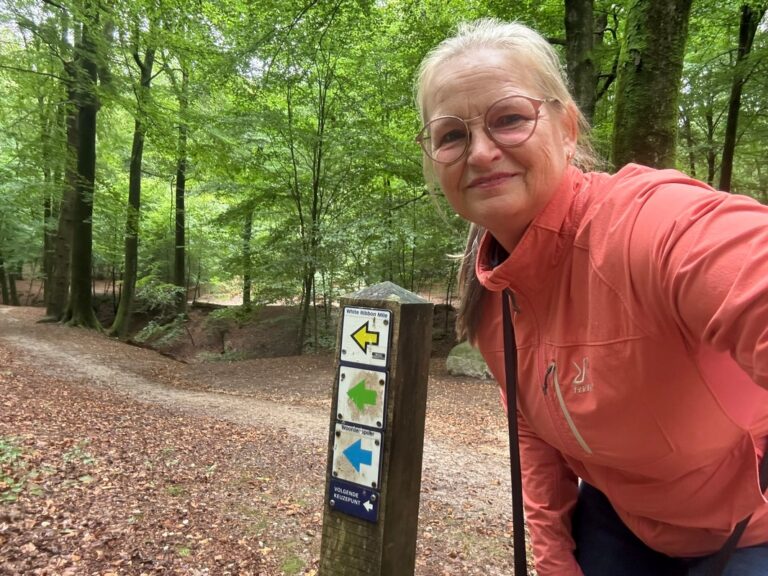
Outside, I look for the White Ribbon Mile signs. They are white, with a yellow arrow and small lettering. Once I find them, I set off.
I recognise part of the route from the Perimeter Walk, but I also discover stretches of countryside I have not seen before. It is peaceful here. With the museum’s stories still in my mind, I think about the soldiers who fought, waited and sought cover in this landscape.
Something is puzzling me, though. This walk is called the White Ribbon Mile, isn’t it? I feel as though I have already walked more than a mile. And I have not seen a white ribbon anywhere.
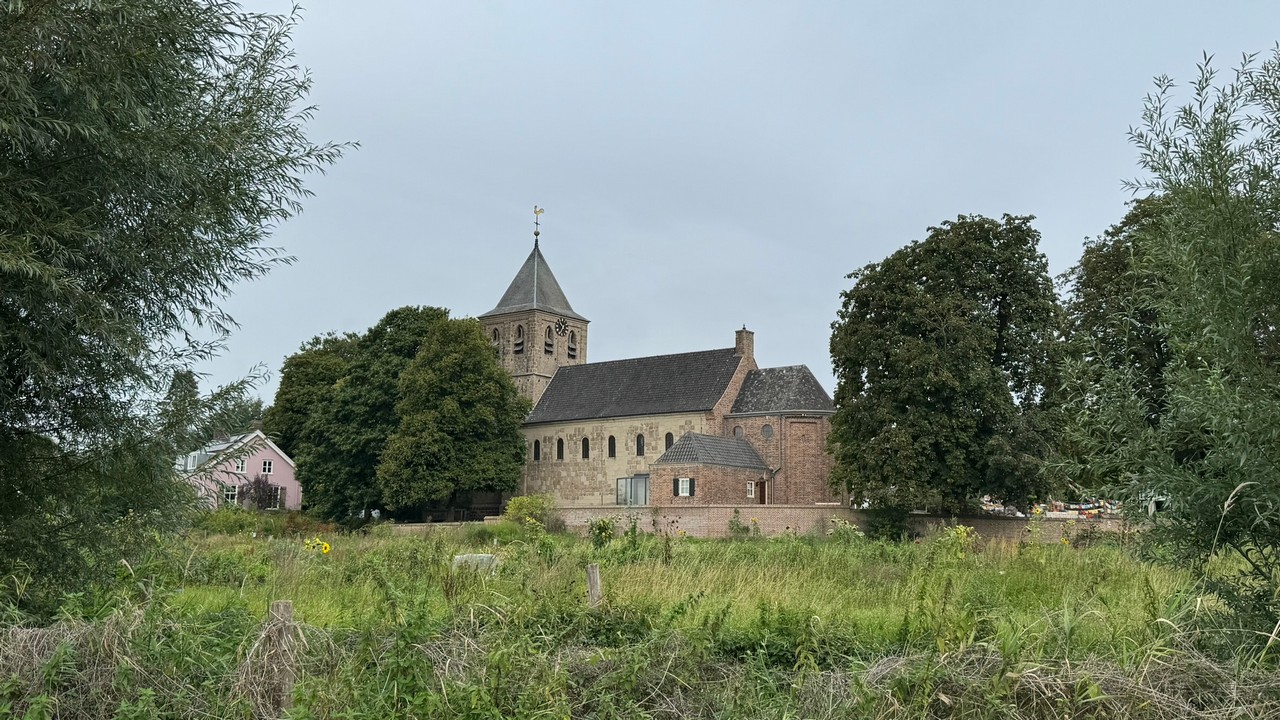
At the Old Church, or Oude Kerk, I find out why.
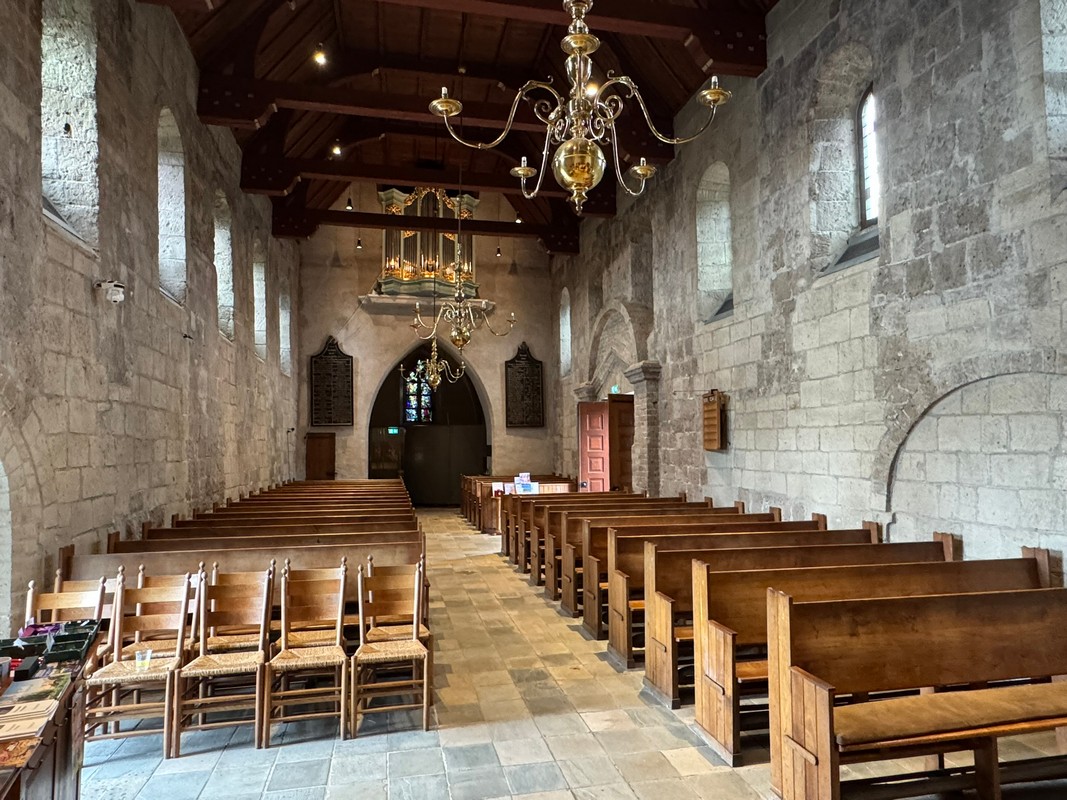
I have deliberately chosen a Wednesday because, on the day of my visit, the church is open from 1 pm to 4 pm.
Inside, it is quiet and serene. There are no elaborate decorations or large statues. It is precisely that simplicity that appeals to me.
When I ask about the walking route, someone kindly explains. The marked walk from Hartenstein leads to the Old Church. This is where the section across the floodplain, marked by the white ribbon, begins.
That explains both the missing ribbon and the distance I have already covered.
A gentleman tells me about the night of 25–26 September 1944, when the remaining troops withdrew from Oosterbeek towards the Rhine. In darkness, rain and under fire, they had to reach the river to be taken across.
He describes the small, fragile canvas boats used to ferry soldiers over the water. He also explains the role of the white ribbon in guiding them.
Today, the ribbon hangs clearly along the route. Back then, he tells me, the white strips lay close to the ground. The men following the route could see them without making the path visible from a distance.
His explanation gives that simple ribbon much greater meaning.
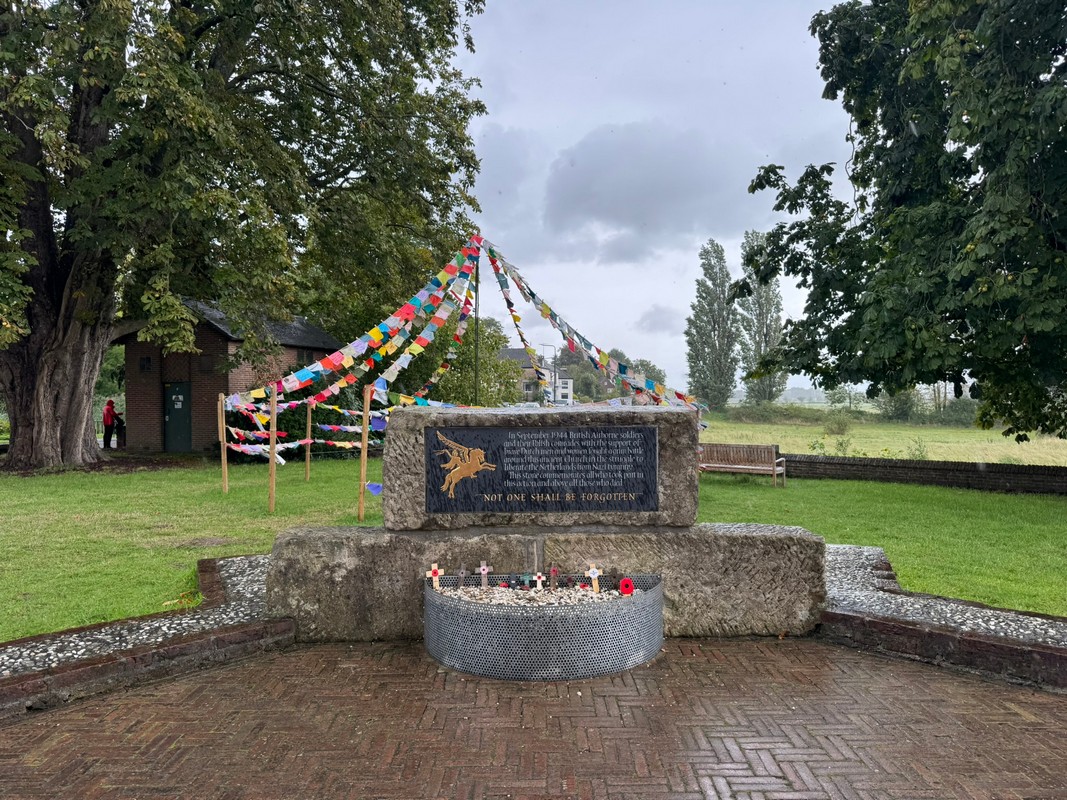
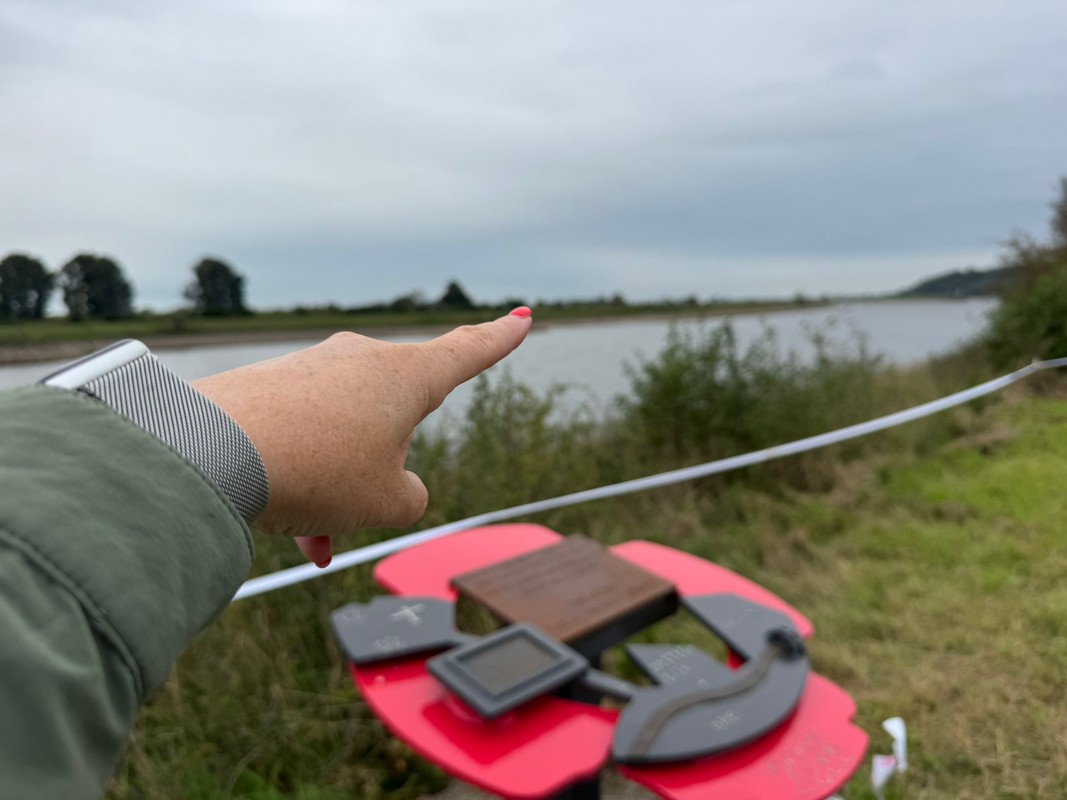
Behind the church, I find the beginning of the ribbon. Today, it is attached to posts along the path. The route passes just behind the building, giving me another lovely view of the church.
Information panels stand beside the path. My advice is to take your time and read them. They explain what happened here and change the way you see your surroundings.
At the start, a QR code lets you listen to a soldier’s story. A sign also asks visitors to walk in silence, reflecting the soldiers’ efforts to withdraw as quietly as possible.
Silence feels appropriate here.
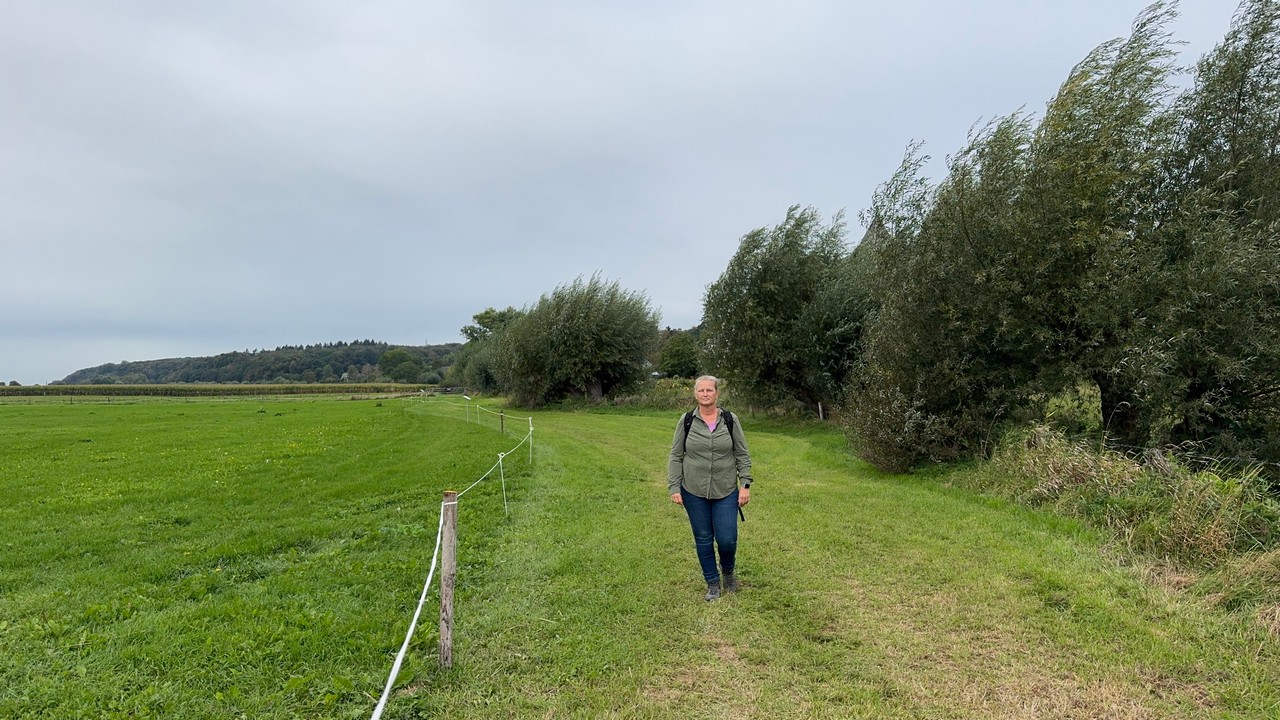
I follow the ribbon towards the Rhine. Today, I can look around at leisure, glance back at the church and walk calmly towards the river. For the men making this journey that September night, every step was filled with uncertainty. In the darkness, the white ribbon guided them towards a possible crossing.
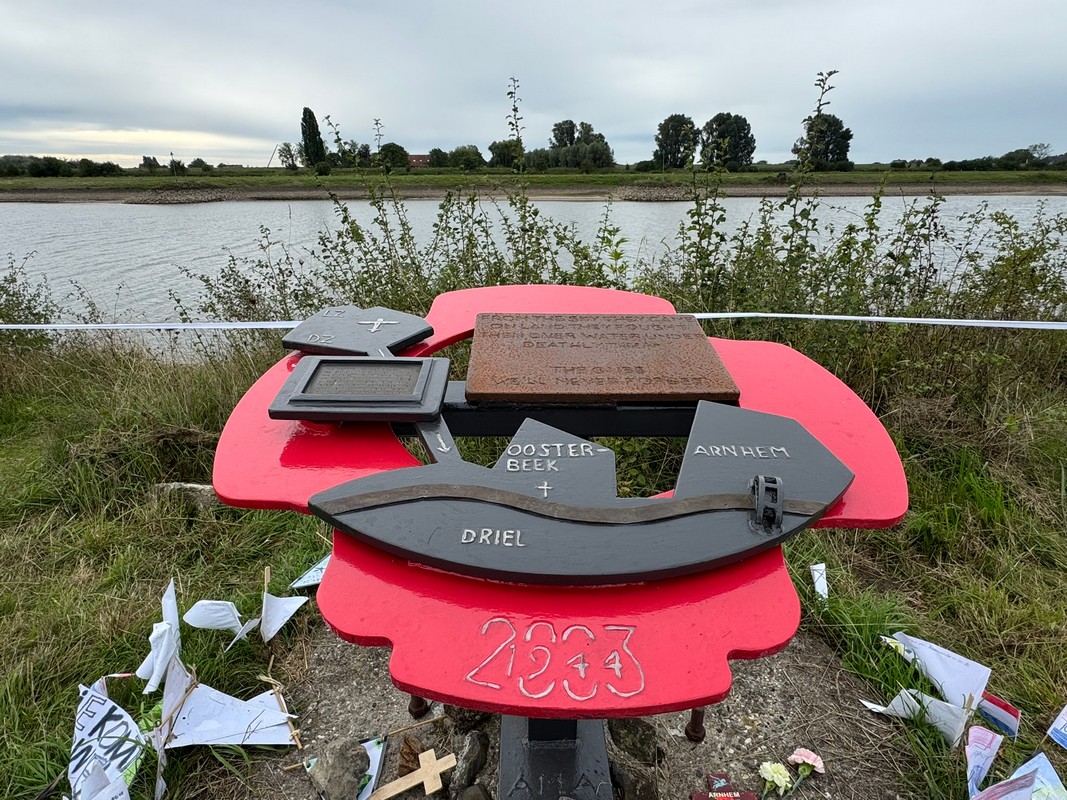
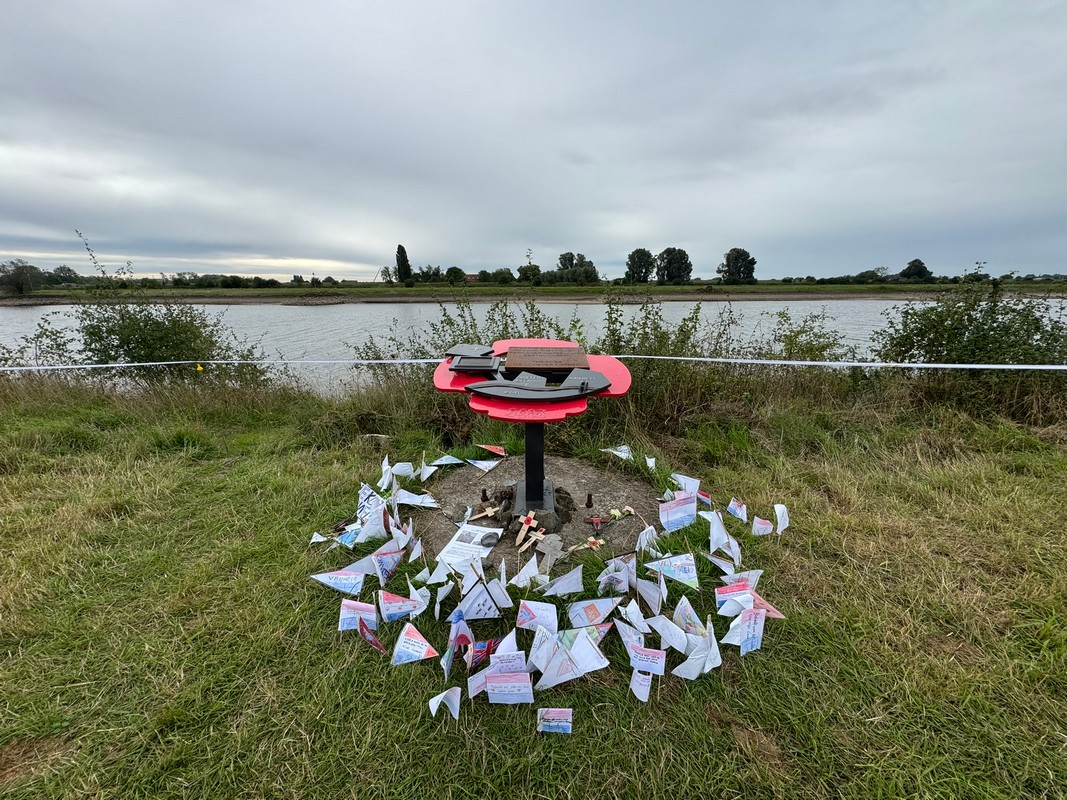
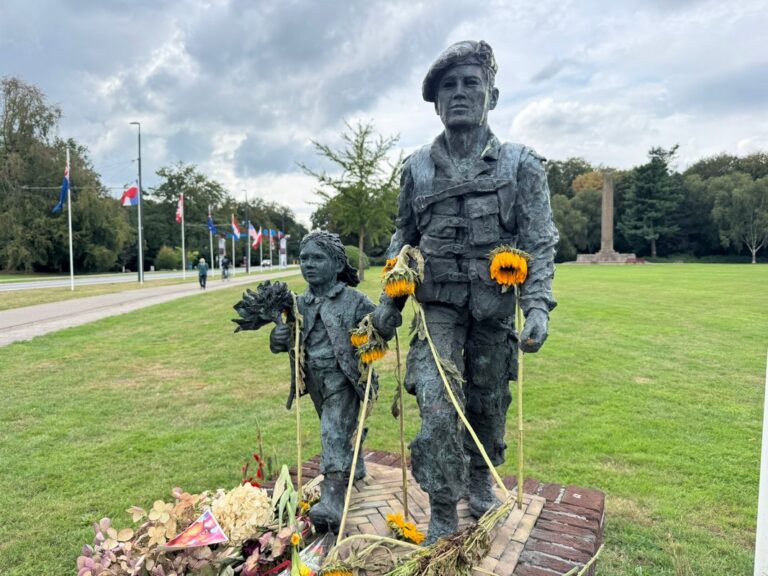
At the end of the path stands a memorial erected in 2003, near the place where soldiers boarded the small boats.
Small flags with drawings have been left beside it. These simple gestures of remembrance move me.
Across the river, I recognise the spot where I stood during my earlier walk exploring the story of the Polish troops in Driel. Then, I was looking towards this bank from the opposite side. Now, the stories of the two walks come together.
I stay for a while and look across the water. After the cemetery, the museum and the stories along the way, the river means much more to me today than a beautiful view.
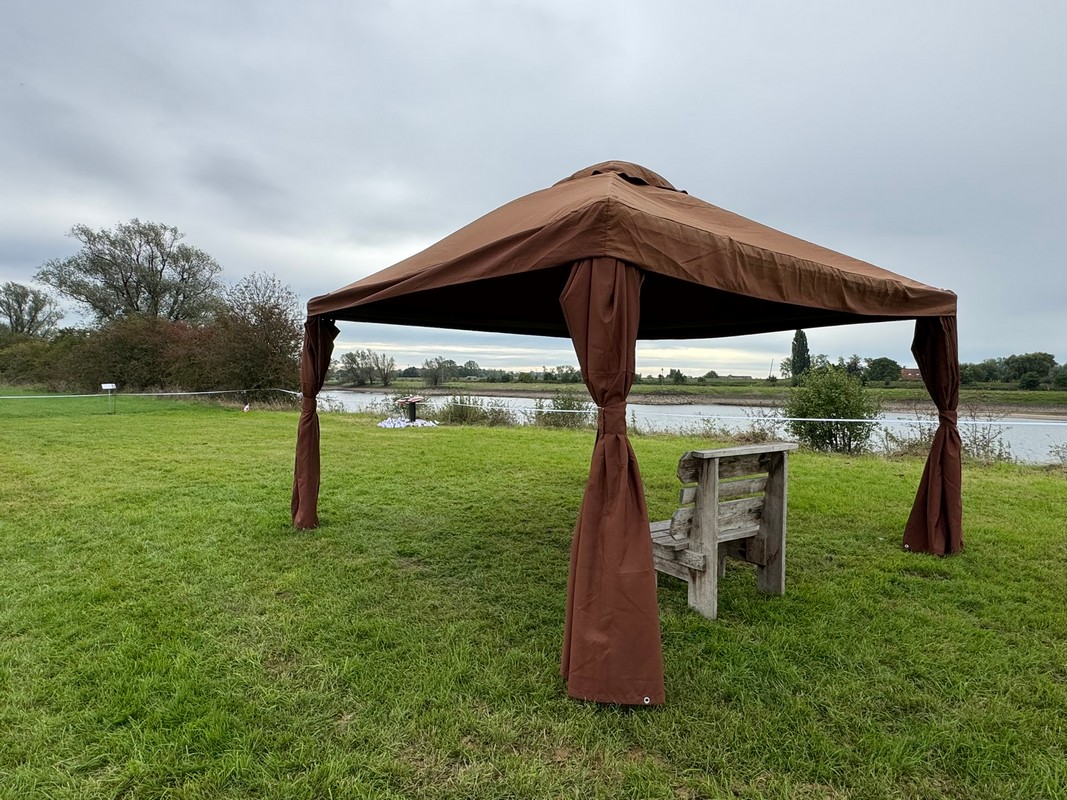
You can follow the route from Hartenstein through the woods to the Old Church throughout the year.
The section across the floodplain to the riverside memorial is only accessible during the annual opening period in September. The white ribbon is removed afterwards. Check the official White Ribbon Mile website for the dates before planning your visit.
If you would also like to go inside the Old Church, check its current opening hours in advance.
For me, the cemetery and museum are an essential part of this walk. The encounter among the white headstones, the introductory film and the explanation in the church all give meaning to what I see along the way.
It is the personal stories that stay with me most. Like that of a son who never knew his father, and a friend who comes to find his grave more than eighty years later.
What is the White Ribbon Mile?
A remembrance walk in Oosterbeek following the route taken by Allied soldiers retreating towards the Rhine during the night of 25–26 September 1944.
Where does the White Ribbon Mile start?
The walking route leads from the Airborne Museum at Hartenstein to the Oude Kerk. The section marked with white ribbon begins behind the church and continues across the floodplain to the riverside memorial.
Can you walk the route all year round?
The route from Hartenstein to the Oude Kerk is accessible throughout the year. The section across the floodplain to the memorial only opens during a limited period in September.
Do you need to visit the museum first?
It is optional, but I recommend it. The museum helps you understand the battle and gives extra meaning to the places you pass.
Is the Airborne War Cemetery part of the route?
It is a separate stop. I visited the cemetery before heading to Hartenstein to start my walk.
Location: Oosterbeek, near Arnhem, the Netherlands.
Starting point: Airborne Museum at Hartenstein, Utrechtseweg 232, Oosterbeek.
Route: From Hartenstein through the woods to the Oude Kerk, followed by the seasonal white-ribbon section towards the Rhine.
Waymarking: White signs with yellow arrows towards the church; a white ribbon marks the seasonal section across the floodplain.
What you will see: Hartenstein, woodland, the Oude Kerk and, during the September opening period, the riverside memorial.
My tip: Visit the museum beforehand and take time to read the information panels along the walk.
Good to know: Visitors are asked to walk the white-ribbon section in silence. Check the church’s opening hours if you want to look inside.
Route and access dates: Check the official White Ribbon Mile website before your visit.